
.png)
What Top HR Experts Say Every Company Must Do for Employee Engagement in 2026
6 minutes
|
Engage Team
Insights from HR leaders, people practitioners, and engagement experts
Featuring voices from: OpenText · National Care Group · Cognite · TrustFord · Retail Trust · Birmingham City Council · Howarths · OPSWAT · CommsRebel · Circular Benefits · Pegasus Health · Aspen · Effective Energy · The LCap Group
Employee engagement has always been a moving target. But the pace of change heading into 2026 is different. Artificial intelligence is reshaping daily workflows and the expectations employees bring to work, around transparency, purpose, and belonging, have risen sharply since the pandemic.
Against this backdrop, we asked a straightforward question to HR leaders, internal comms professionals, wellbeing practitioners, and people consultants:
What is the one thing every company should do to truly engage their people in 2026?
The responses we received were candid, specific, and, in places, deliberately provocative. What struck us most was not just the diversity of angles, but the underlying coherence. Whether contributors spoke about AI adoption, manager behaviour, listening culture, or wellbeing investment, they were pointing toward the same root cause: too many engagement strategies are still designed around what organisations find convenient, rather than what employees actually experience.
This report groups their thinking into five themes that define where engagement is heading. We have added context and analysis around each theme, but the expert voices are the centrepiece. These are practitioners who work with real organisations every day.
We hope this report is useful. Not as a checklist, but as a prompt to ask harder questions about your own approach.
This report was produced as part of Engage's ongoing work to support HR, Internal Comms, and People leaders with the insight and tools they need to build workplaces where people genuinely want to show up.
The Engagement Landscape in 2026
The starting point for any honest conversation about engagement in 2026 has to be the numbers. According to Gallup's most recent global research, only around 21% of employees worldwide are engaged at work. That figure has barely moved in a decade, despite enormous investment in HR technology, wellbeing programmes, and leadership development.
What has changed is the context. Three forces are converging in ways that make the stakes higher than they have been before.
Artificial intelligence is no longer a future consideration
AI tools are already embedded in the day-to-day work of many employees, and adoption is accelerating. For HR and People leaders, this creates a double challenge: managing the anxiety that AI generates among those who fear displacement, while building the skills and confidence that allow organisations to benefit from what AI actually offers. Getting this wrong carries a real cost. Getting it right requires treating AI adoption as a people project, not a technology rollout.
The regulatory environment is shifting
In the UK, the Employment Rights Bill is introducing reforms that will affect how organisations think about fair working practices, employee protections, and transparency. Organisations that get ahead of this, by communicating changes early and involving employees in how they are implemented, will be better placed than those that treat compliance as an afterthought.
Attention has become the scarcest resource in the workplace
The volume of communication most employees now receive, across email, intranet, collaboration tools, and messaging apps, has reached a point where more messages no longer means better reach. The organisations seeing the strongest engagement are those that have moved away from broadcast-first communication and toward experiences that feel relevant, timely, and human.
Taken together, these forces explain why the experts we spoke to were united on one thing: the old playbook is not enough. What follows is what they suggest doing instead.
Theme 1: Make AI a People Project
Of all the topics that surfaced in our expert responses, AI was the most prominent. Not because every contributor works in technology, but because the anxiety around AI is now widespread across every sector and every level of an organisation. The question is no longer whether AI will affect your workforce. It is whether your people feel ready for what comes next.
The contributors who addressed this theme made a consistent argument: the organisations that will see the best outcomes from AI are those that invest in bringing their people along, not those that deploy tools and assume adoption will follow.
"Invest in tiered, personalised AI training programs that meet employees where they are. As AI becomes embedded in every aspect of work, the skills gap is deeply individual. Some employees are already experimenting with AI tools, while others feel uncertain about where to start. Effective AI training shouldn't be one-size-fits-all. It needs to offer multiple pathways tailored to different skill levels, from foundational courses for beginners to advanced workshops for power users, with practical applications tied directly to employees' daily work." — Amber Soto | Global Senior HR Business Partner, OpenText
Soto's framing of the skills gap as "deeply individual" is important. It challenges the instinct to run a single AI awareness session and consider the work done. The employees who most need support are often the ones least likely to ask for it, and a generic training programme can inadvertently reinforce the gap it was designed to close.
The anxiety dimension is equally significant. Sharon Ashcroft, People Director at TrustFord, put it plainly:
"Take them on the AI journey with you and ensure that they understand that AI is about supporting them in their roles and not replacing them. Don't let them fear that AI will take over their roles as if they feel this, they will resist any changes." — Sharon Ashcroft | HR Director, TrustFord
TrustFord is one of the organisations that has used Engage's platform to reach its frontline workforce at scale, achieving 100% adoption in three weeks. The insight Ashcroft shares reflects something they have learned in practice: when employees feel informed and included in technological change, resistance falls away. When they feel things are being done to them, it rises.
Jo Carlin at Effective Energy approached the same question from a different angle, focusing less on training and more on what AI creates space for:
"Think about how AI can improve workflows, not replace people. Creating space for employees to add value by developing their critical thinking skills allows organisations to operate more effectively within increasingly ambiguous environments." — Jo Carlin | Chief People Officer, Effective Energy Group
Jennifer Erfurth at OPSWAT connected this theme directly to trust and leadership, arguing that AI adoption and employee engagement are inseparable from how managers behave:
"In 2026, the single most important driver of employee engagement will be trust built through clarity, follow-through, and responsible use of AI. Organizations that are transparent about how AI is used, invest in upskilling, and equip managers to lead through change will earn trust and discretionary effort." — Jennifer Erfurth | Chief People Officer, OPSWAT
The thread running through all four responses is the same: AI adoption is not a technology decision. It is a culture decision. The organisations that frame it as such, and invest accordingly in communication, training, and trust, will be the ones that see genuine returns.
Theme 2: Fix the Management Experience First
Ask most employees what drives their day-to-day experience at work, and they will not mention the engagement strategy. They will mention their manager. Research has consistently shown that the quality of the relationship between an employee and their direct manager is one of the strongest predictors of engagement, retention, and wellbeing.
Two of our contributors challenged the sector to stop looking for sophisticated solutions when the most important lever is also the most overlooked: the quality of everyday management behaviour.
"Stop launching engagement initiatives and start fixing the everyday management and leadership experience. Good and affective conversations, through active listening and recognition, done well and done often, beats any engagement strategy and means more to your people." — Dee Roberts-Molloy | Head of HR, Birmingham City Council
Roberts-Molloy's point carries weight precisely because it is so unglamorous. There is no technology shortcut, no platform feature, and no comms campaign that substitutes for a manager who listens well. Organisations that invest heavily in engagement tools while neglecting manager development are building on sand.
Gavin Howarth at Howarths made a related argument, but through the lens of what skills organisations need to prioritise as AI changes the nature of work:
"In a 'BANI', tech-centric world, the winners on workforce engagement go all in on upskilling managers on so called 'soft skills' (rebranded for 2026 and beyond, 'power skills'). EQ becomes the critical human differentiator." — Gavin Howarth | CEO, Howarths
The reframing from "soft skills" to "power skills" is more than semantic. It reflects a genuine shift in how these capabilities are being valued. As AI handles more of the technical and procedural work, the distinctly human capacities of managers — emotional intelligence, coaching, clarity of communication, and psychological safety — become more valuable, not less.
Claire Leake at National Care Group offered a practical extension of this theme, connecting manager capability to the regulatory changes coming through the Employment Rights Bill:
"Employers can strengthen engagement this year by proactively communicating changes, equipping managers to navigate them confidently, and involving colleagues early in shaping how the new rights are embedded into everyday practice. Over-communicating will build trust through transparency." — Claire Leake | Chief People Officer, National Care Group
Leake's framing is a useful reminder that engagement does not exist in a vacuum. Employees who are uncertain about their rights, or who feel that changes are being managed around them rather than with them, are harder to engage on almost everything else. Equipping managers to have honest, clear conversations about what is changing is foundational.
Theme 3: Make Every Voice Count
Listening has always been part of the engagement conversation. What our contributors argued, in different ways, is that most organisations are still not doing it well. The problem is rarely a lack of listening mechanisms. It is a lack of genuine action on what is heard, and a tendency to design listening processes around what is convenient for the organisation rather than what reflects how employees actually experience it.
"Design work and communication around how people actually experience the organisation, not how leaders assume they do. Too many engagement efforts in 2026 will still default to louder messages, shinier platforms, or bigger initiatives. But real engagement comes when people feel seen, trusted, and confident enough to contribute, challenge, and belong." — Advita Patel | Director, CommsRebel
Patel's challenge to "design around how people actually experience the organisation" is harder than it sounds. It requires leaders to step back from their own assumptions about what employees want, and to invest in the kind of ongoing, human listening that goes beyond annual surveys.
Mo Kang at Aspen made a complementary point, arguing that in a world saturated with digital tools, the act of face-to-face listening has become more powerful, not less:
"Actively listening to your people through face-to-face conversation is increasingly important. Run Speakeasy sessions, hold skip-level meetings, hold CEO-led two-way Town Hall meetings, create Engagement Champions. Measure your impact through climate and annual surveys and make visible any action you take as a result." — Mo Kang | Group Chief Corporate Affairs and People Officer, Aspen
The final element of Kang's response deserves particular attention: "make visible any action you take as a result." The research on what makes listening programmes fail is unambiguous. When employees do not see evidence that their feedback has influenced decisions, participation in future surveys drops, and cynicism rises. Closing the loop is not optional.
John Branigan at JLBR Consultants raised a structural challenge that many organisations overlook, particularly those with distributed or deskless workforces:
"The only way to truly engage with everybody is to find a platform where everybody can be part of the discussion, with or without a company email address." — John Branigan | Owner and Fractional CTO, JLBR Consultants
This is a practical barrier that many engagement programmes hit and then quietly work around. If your listening tools require a corporate email login, you have already excluded a significant portion of your workforce before the conversation has started. Mobile-first platforms that support access without a company email address are not a nice-to-have for deskless and distributed teams. They are the baseline.
Theme 4: Anchor Engagement in Purpose and Clarity
Engagement without direction is difficult to sustain. When employees do not understand how their work connects to a broader goal, or when the organisational vision is unclear or inconsistently communicated, it becomes harder for them to find meaning in what they do. Two contributors focused on this link between clarity, purpose, and sustained engagement.
"Set out a clear and authentic vision. Colleagues need to know what they are working towards and how their role and effort contributes. From this, you can build the true momentum, reward, engagement, and enthusiasm that comes from everyone being on the same page." — Rebecca Corker | Group Transformation Director, The LCap Group
The word "authentic" in Corker's response is doing real work. Employees have become skilled at distinguishing between purpose statements that are genuinely embedded in how decisions are made, and those that live only on the careers page. A vision that is not reflected in the day-to-day behaviour of leaders and managers loses credibility quickly.
Bradford Wilkins at Cognite took this idea into more operational territory, arguing that clarity of purpose needs to be matched by clarity of role, and that AI creates new possibilities for achieving this:
"The most successful companies will abandon the pursuit of balance in favour of radical alignment, treating employee engagement and business impact as a single, self-reinforcing engine rather than opposing forces. The key is moving beyond static job descriptions toward a precision, skills-based architecture that places talent in high-leverage roles where their unique capabilities directly solve the organisation's most critical bottlenecks." — Bradford Wilkins | Vice President, People & Organization, Cognite
Wilkins' concept of "radical alignment" is worth unpacking. The conventional framing treats employee satisfaction and business performance as a balance to be managed. His argument is that the highest-performing organisations reject that framing entirely and instead look for the intersection where individual strengths meet the organisation's most pressing needs. When employees feel their specific capabilities matter to outcomes that are visible and significant, the sense of purpose is tangible rather than aspirational.
Theme 5: Show Wellbeing Support in Practice
Wellbeing has been a fixture of the engagement conversation for years. What our contributors challenged was the gap between wellbeing as a communications exercise and wellbeing as a genuine expression of organisational values. The distinction matters because employees can tell the difference.
"Stop the wellbeing comms spray-and-pray method. Instead, use data to drive your wellbeing communications and campaigns, making them more engaging and personalised." — Poppie Foakes | Director of Product and Innovation, Retail Trust
The "spray and pray" critique is pointed. It describes an approach that many HR teams will recognise: a calendar of wellbeing awareness days, a generic EAP mention in the all-staff newsletter, and a hope that someone somewhere finds it useful. Foakes is arguing for something more disciplined — using the data organisations already hold to understand which employees are most likely to need support, and delivering the right message at the right moment.
Victoria Jones at Pegasus Health made the case for investment-backed wellbeing as a cultural signal rather than a transactional perk:
"Invest in meaningful, company-funded benefits that demonstrate a genuine commitment to employee wellbeing. Engagement starts with trust, and trust is built when employees see that their employer is willing to put resources behind their health and happiness, not just offer optional perks." — Victoria Jones | Director, Pegasus Health
The distinction Jones draws between "optional perks" and funded benefits is a useful test for any wellbeing programme. Does the investment require employees to opt in and navigate a process to claim something? Or does it demonstrate a commitment that is visible and unconditional? The former signals efficiency. The latter signals care.
Warren Lunt at Circular Benefits offered the most expansive reframe of the wellbeing question, arguing that the very concept of engagement needs to be rethought:
"Stop trying to engage employees at work, and start supporting them in life. AI will continue to change how people work, but it won't change what people care about. The companies that win will be the ones that focus on the core facets of their employees' lives and make meaningful, practical support effortlessly accessible. That means moving beyond generic perks and investing in solutions that address what genuinely matters: financial security, health, family, time, and personal progress." — Warren Lunt | Co-Founder, Circular Benefits
Lunt's framing is a provocation in the best sense. If engagement is currently measured by what happens inside work hours, and wellbeing support is offered as a workplace benefit, both approaches start from the same assumption: that the employment relationship is the primary unit. His argument is that organisations which support employees as whole people — with lives, families, and concerns that extend far beyond the job — will earn the kind of trust and commitment that no engagement programme can manufacture.
What This Means for Organisations in 2026
Taken together, the five themes that emerged from our expert conversations point toward a coherent direction. Engagement in 2026 is not about doing more. It is about doing the right things with more intention, and closing the gap between what organisations say they value and how that actually shows up for employees every day.
The organisations most likely to build genuinely engaged workforces in 2026 share a few characteristics:
They treat AI as a cultural project, not a technology project
They invest in tiered, accessible training. They communicate transparently about how AI is being used and why. And they equip managers to lead through uncertainty, rather than leaving employees to navigate it alone.
They invest in manager quality as seriously as any technology platform
They recognise that the most powerful engagement tool is a manager who listens, recognises, and communicates with clarity. And they put real resource behind developing that capability.
They build listening into how the organisation operates, not as an annual event
They create multiple channels for employee voice. They close the loop visibly. And they design their engagement programmes around how employees actually experience the organisation, not around what is easiest to measure.
They connect individual roles to organisational purpose in ways people can feel
They move beyond vision statements and into the practical question of whether employees understand how their specific work contributes to outcomes that matter. Skills-based architecture, clear role alignment, and visible impact all serve this goal.
They back wellbeing investment with genuine resources
They move beyond awareness campaigns and optional perks toward funded, accessible support that treats employees as whole people. And they use data to make that support timely and relevant rather than generic.
How Engage Helps Organisations Act on These Themes
Every theme in this report points toward a common challenge: reaching the right people, with the right message, at the right moment, and making it easy for them to respond. That is exactly what Engage is built to do.
Engage is the AI-powered, mobile-first community engagement platform that connects employees and customers in one branded app. With Appi™ AI, organisations can deliver personalised, lifecycle-aware communications and self-service across a branded app and web, without requiring a company email address to access it.
For organisations working through AI adoption
Engage provides the communication infrastructure to reach every employee with clear, consistent messaging about how AI is being used and what support is available. Micro-learning modules within the app mean upskilling happens where employees already are, on their phones, in the flow of their day.
For organisations investing in manager development
Engage gives managers the tools to communicate with their teams directly, to recognise contributions visibly, and to share updates and resources without routing everything through a central comms function. Recognition and pulse surveys are built in, so the habits that matter are easy to build.
For organisations building a listening culture
Engage supports pulse surveys, AMAs, and direct messaging without requiring employees to have a corporate email or log in through a desktop. That matters enormously for frontline and deskless workers. Appi™ AI surfaces sentiment trends and engagement signals so leaders can act on what they are hearing, not just collect it.
For organisations working on purpose and clarity
Engage's targeted broadcast and segmentation tools mean that leadership communications can be tailored to specific roles, locations, and teams. Every employee can receive messaging that is relevant to where they sit in the organisation and what they are working toward.
For organisations committed to meaningful wellbeing support
Engage integrates with benefits platforms and HR systems to surface wellbeing resources at the right moment, based on employee behaviour and lifecycle stage rather than a fixed calendar. Appi™ AI's predictive engagement means that the right support reaches the right people before the moment of crisis, not after.
Ardonagh Group, with 11,000 staff across 250 sites, achieves 90% monthly colleague engagement on Engage. TrustFord reached 100% adoption across its frontline workforce in three weeks. Organisations using Engage report 21% higher productivity and 41% less absenteeism, benchmarked against Gallup's data.
If the themes in this report resonate with challenges your organisation is facing, we would be glad to show you what Engage looks like in practice.
Ready to build a thriving colleague community in 2026?
See how Engage helps HR and People leaders reach every employee, build listening cultures, and prove the ROI of engagement investment.
Book a Demo with Engage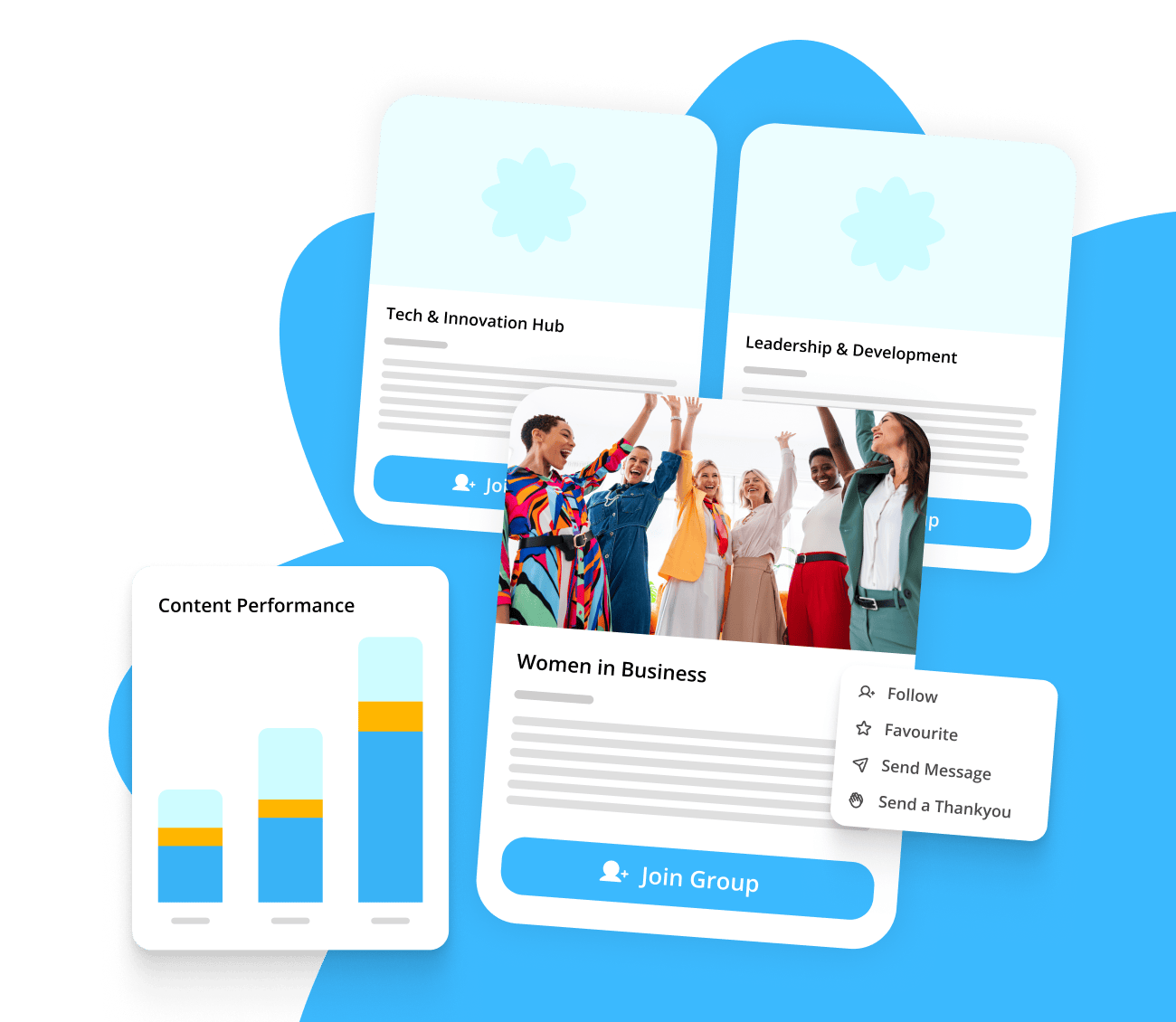
Related case studies
One-way messages fade. Two-way engagement sticks. Engage turns communication into connection through an AI-powered platform.
Ardonagh Group strengthens colleague engagement and communication
Engage is proud to announce the successful implementation of its colleague engagement platform across The Ardonagh Group.
.png)
Top 10 Employee Engagement Platforms for HR Teams in 2026
Compare the top 10 employee engagement platforms for 2026. A practical guide for HR and internal comms leaders covering frontline engagement, community, features, and best fit.

Engage celebrates successful implementation of enterprise engagement solution for PartsPlus
Engage implements enterprise engagement solution for PartsPlus